
When the garden goes quiet in October, most people put their outdoor plans on ice until spring. Yet a new patio in winter in Gloucester is often a very good plan.
Waiting feels sensible. After all, who builds a patio in the cold? Quite a lot of people, as it happens, as long as it’s designed well and built in the right conditions. In fact, winter is one of the best times to sort out the design side of a garden. That way, the build can start the moment the weather allows.
Here’s how we approach winter patios across Gloucester, Cheltenham and the rest of Gloucestershire, and when we’d advise you to wait.
The short answer: yes, you can fit a patio in winter in Gloucester. Groundwork can carry on in cold, dry weather. The laying itself needs temperatures of 3°C or above while the mortar sets, including overnight, and ground that isn’t frozen or waterlogged. So we plan the build around the forecast, not the calendar.
Why winter is the best time to design your patio
Good patios start on paper, not with a digger. Winter gives you time to think about how you actually want to use the space. Do you want somewhere to eat? A sunken seating area? A spot that catches the evening light?
We use 3D design so you can see your patio before any work starts. That means you can try out sizes, materials and layouts while the garden is dormant, rather than rushing decisions in April. Once we agree the design, the build slots straight into the next good spell of weather.
You can read more about how we plan and build on our paving installation page.
Can you build a patio in winter in Gloucester properly?
Yes, provided the installer respects the weather. Most of the work happens below the surface. We dig out, lay a sub-base and compact it in layers, and that part carries on happily in the cold.
The critical stage is the mortar. The Mortar Industry Association advises stopping work once the air drops below 3°C. Work should restart only when it reaches 1°C and is forecast to rise above 3°C. If fresh mortar freezes before it hardens, it can lose its bond, and that shows up as loose or rocking slabs later on.
So we keep an eye on the Met Office forecast for the nights ahead, not just the day itself. If a frost is coming, we cover fresh work or save the laying for a milder day.
Gloucestershire ground: clay in the vale, stone on the hills
Gloucestershire is a county of two very different grounds, and both affect a winter build.
Around Gloucester, Tewkesbury and much of the Severn Vale, heavy clay soils are common. Clay holds water through the winter, so it can turn soft after a wet week. A sub-base laid on saturated clay won’t compact properly. As a result, we either wait for it to drain or sort the drainage first.
Up towards the Cotswolds and Cirencester, the ground is often stonier and drains more freely. That usually makes winter groundwork easier. However, it can mean harder digging, so we plan the dig-out with that in mind.
Either way, the sub-base is where a patio succeeds or fails. It’s the part you never see, and the part worth paying the most attention to. Getting it right is what makes a patio in winter in Gloucester last for decades.
Planning a patio in winter: what happens when
Here’s how a typical winter patio project runs with us.
| Stage | When it can happen | What we watch for |
|---|---|---|
| Design and 3D visuals | Any time, ideal in winter | Your brief, how you’ll use the space |
| Ordering materials | Once the design is signed off | Stock levels before the spring rush |
| Dig-out and sub-base | Cold, dry days | Waterlogged or frozen ground |
| Laying the paving | Mild spells at 3°C or above, day and night | Overnight frost and heavy rain |
| Jointing and finishing | Dry days that suit the jointing product | Product temperature limits |
| Lighting and planting | After the paving is down | Planting suits the season |
This approach keeps your project moving through winter without taking risks with the bits that matter. It’s also why a patio in winter in Gloucester doesn’t have to mean a rushed job.
Winter patio myths we hear in Cheltenham and Gloucester
“Nobody lays patios in winter.” Plenty of good firms do. The difference is that they work with the conditions rather than against them. A good winter build simply takes a little more planning.
“If the slabs are down, the job’s safe.” Not quite. Fresh mortar can still freeze overnight, hours after the patio looks finished. That’s why we cover new work when a frost is forecast and check it the next morning.
Choosing materials that suit your home
Gloucestershire homes vary a lot, from Regency townhouses in Cheltenham to Cotswold stone cottages and new builds on the edge of Gloucester. The right patio should suit the house, not fight it.
Porcelain is hard-wearing and easy to keep clean through a wet winter. It needs a slurry primer to bond, though, and that primer has its own temperature limits. Natural stone in warm, honey tones often sits beautifully next to Cotswold stone. However, it needs to dry out before sealing, so we often seal in spring.
Make your patio work on dark evenings
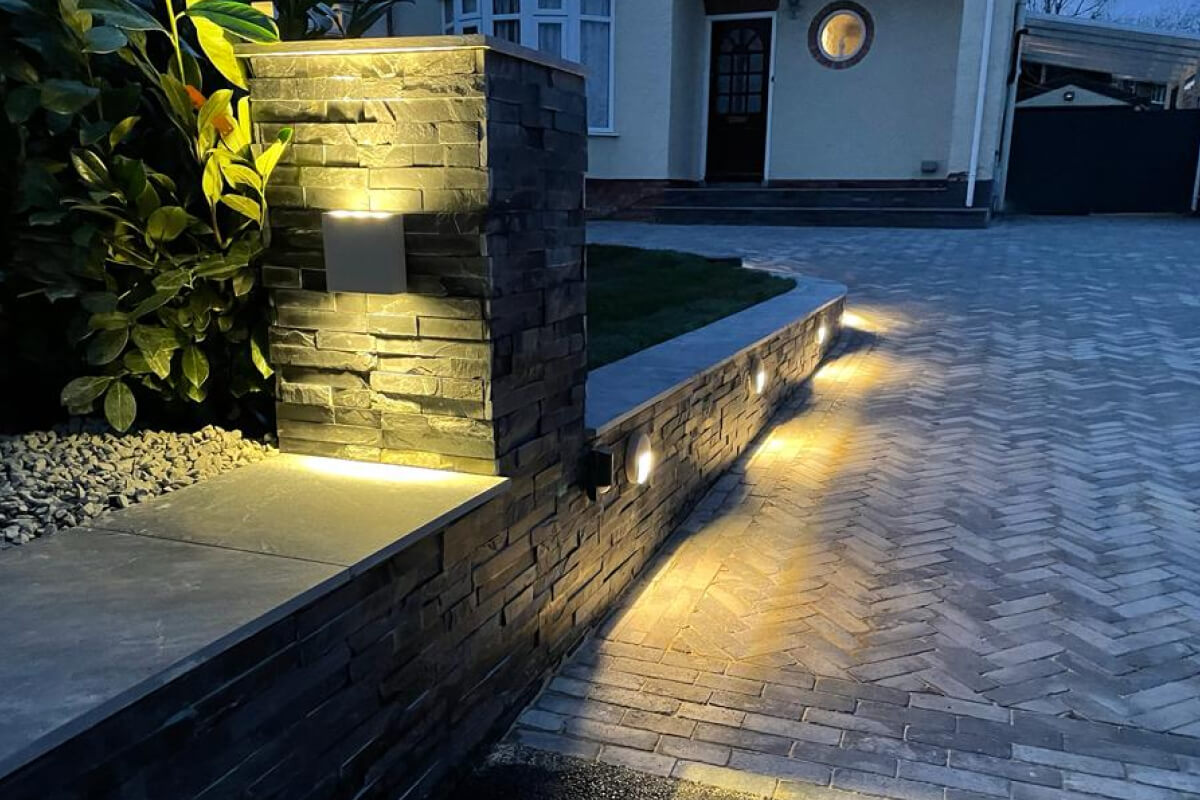
A winter build is a good reminder that patios aren’t just for summer. With the right lighting, a patio becomes somewhere to sit with a fire bowl on a cold, clear evening.
It’s far easier to run cables and fit lights while we build the patio, rather than lifting slabs later. Our garden lighting service fits in with the paving work, so it all goes in together.
If you’re still weighing up timing, our guide to the best time to landscape a garden in Gloucester and Cheltenham covers the full year.
Patio in winter Gloucester FAQs
Can you lay a patio in the rain?
Light drizzle is usually manageable, but heavy rain isn’t. It washes cement out of the bedding and joints, and it softens the ground underneath. We cover fresh work and plan laying days around dry spells, rather than pushing on through a downpour.
What is the coldest temperature you can lay a patio in?
Don’t lay sand and cement mortar when the air is below 3°C. Work can restart once it reaches 1°C and is forecast to rise. The overnight low matters most, because fresh mortar can freeze hours after the slabs have gone down.
Is it worth designing a patio in winter?
Yes. Winter gives you time to think about how you’ll use the space and to see it in 3D before we build anything. We can order your materials early, and the build can start as soon as the weather allows, ahead of the spring rush.
Will a patio laid in winter last as long?
It will if it’s built properly. Problems come from mortar freezing before it sets, or from a sub-base laid on soft, wet ground. With the right checks and protection, a winter patio is just as strong as one laid in summer.
Ready to start your patio?
If you’d like your new patio designed now and ready for spring, we’d love to hear from you. Contact Gloucester Garden Design Company to talk through your ideas.