A family-friendly outdoor kitchen is more than a pretty grill station; it is a layout, a set of materials and a handful of small decisions that make everyday life calmer for everyone who uses the garden. When you plan for real routines, you end up with a space that supports those rhythms without drama. The goal is simple: keep the cook part of the conversation, give children and guests clear routes that do not cross heat, and choose surfaces that clean up quickly so the reset takes minutes rather than hours. Done well, the garden becomes the room the family uses most, from the first mild evenings of spring to the last bright Sundays of autumn.
1. Starting with the flow from door to table
Before you think about appliances, sketch how people will move. The most successful family layouts give you a direct, obstacle-free route from the back door to the dining table, with the hot zone placed at the outer edge of the terrace so smoke and bustle travel away from the house. Aim for at least ninety centimetres of clear space behind the cook so small feet can pass without brushing a hot lid, and keep the main walkway wide enough for someone to carry a tray while another person returns with glasses. If your garden is compact, let furniture do double duty by using a corner bench that opens floor area and gently steers traffic along the same calm path every time.
2. Using the four zones to remove friction
Think in four simple zones and put them in that order so the evening unfolds naturally. Prep sits beside Cook so chopping, seasoning and turning happen without extra steps. Serve sits between Cook and Seat so plates and bowls move outward to guests rather than back through the hot zone. Seat sits where evening light feels kind and prevailing breezes rarely send smoke. When you arrange the terrace in this sequence, the whole experience feels obvious: you come out of the house, you prep, you cook, you hand food across to the pass, and you sit down. No weaving through chairs, no balancing acts with hot trays, no shouting for someone to hold a door.
3. Placing heat where it behaves
Children are curious, pets wander and friends gather where the action is, so the safest place for heat is at the edge of the terrace with clear space around it. Face the cooker so the usual breeze carries smoke away from doors and seating, and under any roofed area use an outdoor-rated hood with baffle filters while observing the clearances in the appliance manual. Give yourself landing zones on both sides of the grill so hot trays have a home, and keep combustibles—fabric screens, low branches, fence panels—well outside the hot zone. If neighbours are close or you prefer quieter weeknights, pair your main grill with a low-smoke plancha or a portable induction hob; it is remarkable how much family cooking you can do with almost no plume at all.
4. Choosing a surface
Family spaces see spills, muddy shoes and the odd toppled juice, so choose materials that shrug off mess and feel secure underfoot. External-grade porcelain with a proven wet slip rating is the easy win: it stays grippy after rain, wipes clean with mild soap and resists the stains that barbecue marinades can leave behind. Textured natural stone can also perform beautifully if it is specified for outdoor use and detailed with the right joints and falls. Keep colours in the mid tones so day-to-day marks are less visible, set gentle falls away from the house so water behaves, and add a discreet channel drain at thresholds to stop heavy rain tracking indoors. This quiet groundwork gives you the confidence to cook even when the forecast is changeable.
5. Giving Prep and worktops proper space
Nothing increases stress faster than a tiny chopping area with nowhere to rest a hot pan. Aim for at least one metre of clear worktop beside your main cooker and a second landing zone on the other side so you can set down trays without juggling. Sintered stone or granite is hard to beat for worktops; both resist heat and stains and look good with age. Exterior porcelain is another excellent option if you want a crisp, uniform finish. Organise the top drawers with the tools you reach for every time—tongs, spatula, probe thermometer, heatproof gloves, foil and a couple of half-size trays—and keep boards and bowls immediately below. When everything you need is exactly where you expect it, you cook more often and the whole family can help without being under your feet.
6. Adding storage that speeds the reset
Families cook more outside when the essentials live outdoors, dry and ready. Two weather-sealed drawers near the cooker will transform your routine, because tools do not migrate back into the kitchen and you never start the evening with a search. Include a deep drawer for trays and chopping boards, a small bin drawer for recycling and waste so you are not making constant trips indoors, and a sealed box or cupboard for charcoal or wood if you use them, which keeps fuel dry and stops it perfuming cushions when the weather is damp. The test is simple: could you say yes to an impromptu Tuesday supper without hunting for anything? If the answer is yes, you have the right storage.
7. Lighting setup
Outdoor cooking becomes effortless at night when lighting is layered rather than loud. Start with a bright, focused task light over the grill and prep so you can judge doneness accurately and read a thermometer without leaning in. Add warm ambient light over the table that flatters faces and makes food look inviting, then mark steps and routes with low, shielded fixtures so children can find their way without glare. Keep controls where you can reach them without crossing the hot zone, and choose warm white in the 2700–3000 K range so stone glows, timber looks rich and the whole scene feels like an easy extension of the house rather than a floodlit stage.
8. Planning for water, power and safety
A compact sink is not essential, but it makes family cooking calmer: quick rinses, clean hands, lettuce revived, boards washed between courses. Fit an isolation valve and a simple drain-down so frost never bites in winter. All electrics should be outdoor-rated on RCD-protected circuits with in-use covers where plugs remain connected, and cables should route away from walkways and heat. Gas should be installed by a qualified professional, with bottles stored in ventilated compartments if you are not running a fixed line. Keep a fire blanket within easy reach and a dry powder extinguisher nearby. These are quiet details, yet they are the difference between a space that looks good and a space you trust.
9. Seating that invites people to stay
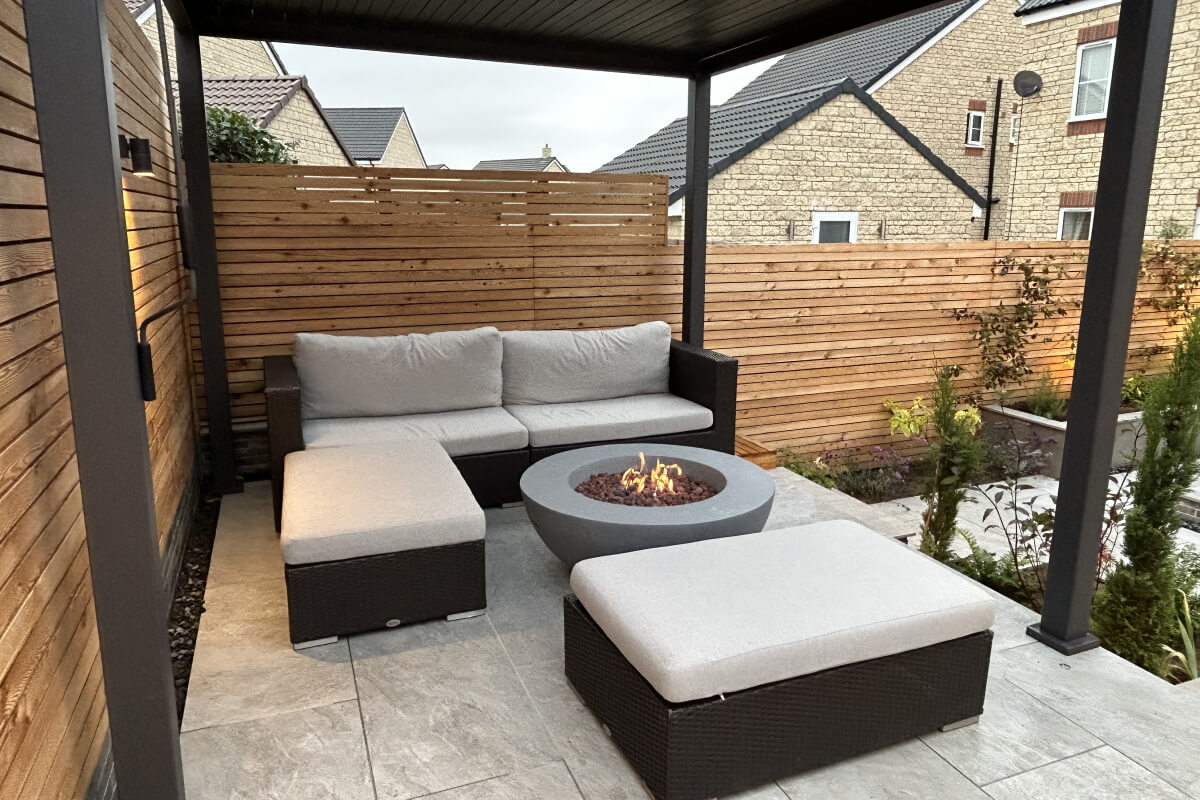
Families linger when seating is comfortable and movement stays easy. Allow around sixty centimetres per person at the table and about ninety centimetres behind chairs so they slide back without catching planters or rails. Corner benches are excellent for smaller terraces because they open floor space and seat more people than individual chairs; add a slim ledge behind the backrest for drinks, sunscreen or a novel while you wait for the next pizza. Choose cushions with quick-dry covers, keep a narrow console nearby for condiments and napkins, and orient the table out of the smoke path so guests watch the theatre without feeling part of it. Small finishing touches make evenings run smoothly.
10. Using shade and breeze control
Families use outdoor kitchens far more when the climate feels on your side. A simple pergola, a louvred roof or a well-placed sail will take the edge off midday glare and keep a light shower from ending the evening. On the breezy side, slim screens or layered planting calm the wind without trapping smoke, and discreet radiant heaters aimed at bodies rather than air make shoulder-season dinners genuinely comfortable. The combination of shade, a little shelter and a touch of warmth turns late April and early October into real cooking months, which means you get better value from the space you build.
11. Making space for kids and pets without worry
Young children and pets want to be near the action, so design a place for them from the start. A shaded play patch within sight of the cook and table lets little ones be part of the evening without straying into heat. Round worktop corners reduce bumps, and a subtle colour change or pencil line on step noses makes edges easy to read at night. Keep the front ledge of any bar deep enough that beakers and elbows sit safely away from the hot zone. For pets, a simple gate or a planting screen keeps paws out of danger while still allowing them to stay close, and sealed storage for food prevents unwelcome visitors when the lights go out.
12. Building habits that keep it easy to love
The most effective maintenance routine is short and regular. After cooking, brush grates while they are still warm, empty the drip tray, wipe worktops with mild soapy water, sweep crumbs and rinse obvious spills from the paving. Once cool, close lids and cover appliances with breathable covers. Treat algae early in shaded corners before it becomes stubborn, and top up any jointing that has opened so water never finds its way under edges. Ten quiet minutes at the end of a meal saves a deep clean at the end of the month and keeps the kitchen feeling ready for the next invitation to cook outside.
13. Spending where it matters, phase the rest
A family-friendly outdoor kitchen does not have to launch as a showroom. Spend first on the bones that make every evening easier: one reliable primary cooker, real prep space, slip-safe paving with proper drainage, outdoor-rated power and planned lighting. Once you are using the space three nights a week, you will know whether a pizza oven, a fridge, a plancha or a roof would add the most joy. Because services were planned from day one, those upgrades slot in without tearing up what you have already built, which keeps costs sensible and momentum high.
Avoid the mistakes that cause stress
Most problems are predictable and easy to prevent on paper. Tiny worktops force a juggling act and turn cooking into a performance. Grills squeezed under solid roofs without extraction trap smoke and heat where you least want them. Flat paving that pools at doorways creates slip hazards and headaches after summer storms. Seating set in the smoke path may look sociable but feels uncomfortable after ten minutes. Solve these with a simple scale sketch, arrows for wind and routes, and measured clearances around heat. A little planning here lets the build feel calm and the results feel inevitable.
The takeaway
Family-friendly outdoor kitchens are built on simple ideas that work in real weather and real life. Keep routes clear, put heat where it behaves, choose surfaces that forgive everyday spills, and store the tools you use most within reach of the cooker. Light the places you work and the paths you walk, give seating the comfort and space it deserves, and add shade and shelter so the season stretches. When those elements come together, weeknights feel easier, weekends feel generous, and the garden quietly becomes the place your family loves most.